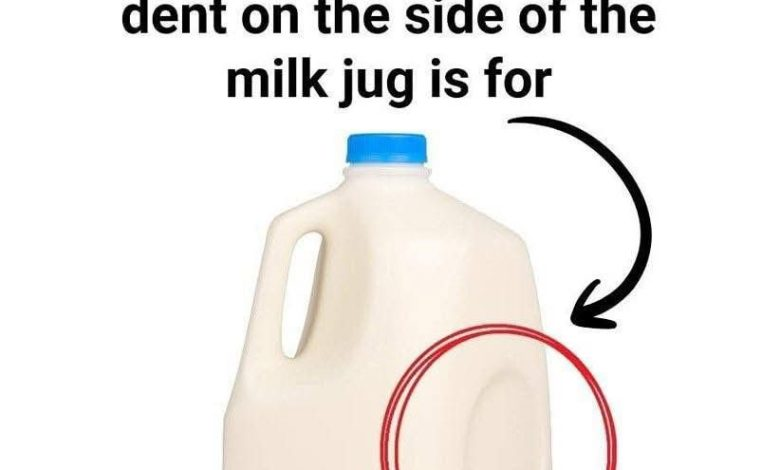

The Surprising Purpose of the Circular Dent on Milk Jugs
Most of us have noticed that little round dent on the side of a plastic milk jug. “I’ll admit it — I’ve stared at that tiny mystery circle more times than I can count.” You know the one—it looks like a small indentation, like someone pressed in a tiny button. Maybe you assumed it was a factory mistake or just decorative. But actually, that circular dent has a very smart job.
Why Milk Jugs Have That Dent
That dent isn’t an accident. It’s a key part of the jug’s design for safety, function, and strength. Here’s why it exists:
1. Helps Manage Pressure
Milk is a liquid, and liquids expand or contract with temperature changes. When milk moves from a warm truck to a cold fridge, it can expand or shrink. The dent acts like a flexible “safety spot,” popping out slightly if the milk expands.
Without it, the plastic could swell, crack, or even burst—especially if the milk freezes. Think of it as the milk jug’s built-in stress relief.
2. Reduces Spills
Ever dropped a milk jug or seen one bumped around in the grocery store? That dent works like a shock absorber. It helps prevent cracks in the plastic, which saves you from messy spills and also reduces costs for manufacturers during transport.
3. Strengthens the Jug Without Extra Plastic
The dent is also an engineering trick. Like arches in architecture, the circle adds strength to the jug without needing thicker walls. This keeps the jug light, strong, and affordable. It’s “good engineering on a budget,” combining efficiency and durability.
A Warning Sign for Spoiled Milk
Sometimes, when milk starts to spoil, bacteria produce gas that creates pressure inside the jug. This can cause the dent to puff outward.
If you ever notice a jug with a bulging or abnormal dent, it could be a sign the milk has gone bad. While it’s not a guarantee, the dent acts as a clever early warning system.

Leave a Comment