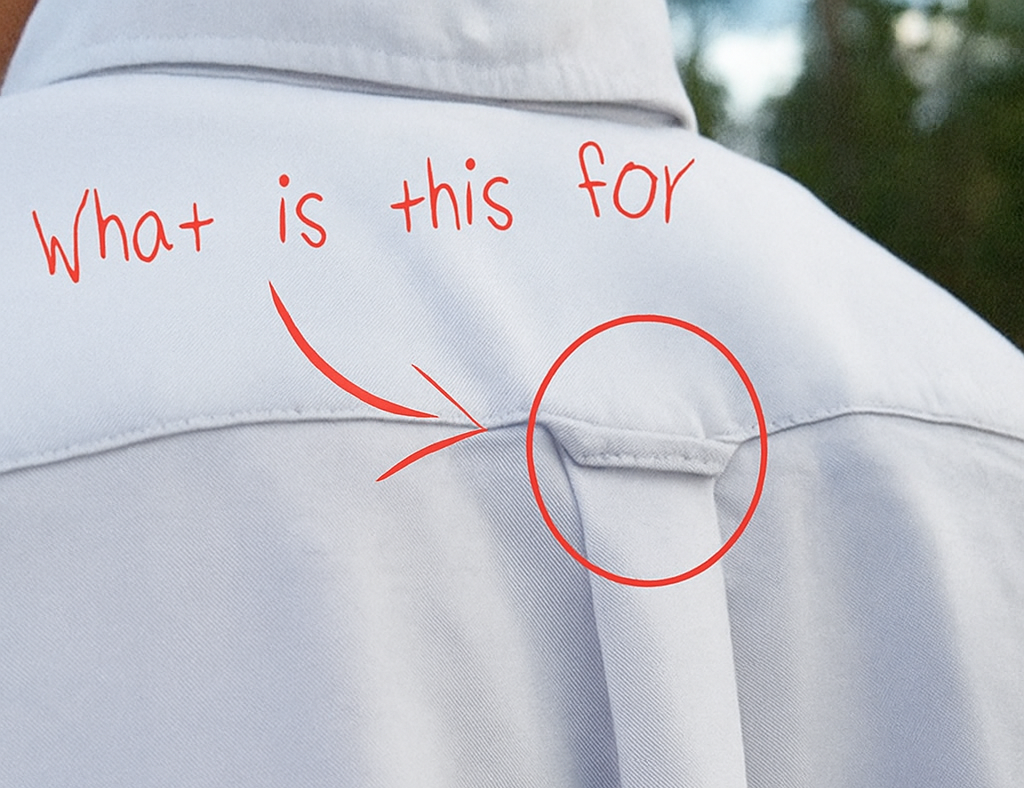

The button-down shirt has long been a wardrobe staple, but there’s one subtle feature many people overlook: the small fabric loop stitched between the shoulders on the back. Known as the locker loop, this tiny strip of cloth carries a surprisingly rich history — one that stretches from Navy ships to Ivy League campuses, and from pure practicality to cultural symbolism.
For illustrative purposes only
Practical Origins
The locker loop first appeared in the U.S. Navy. Sailors lived in tight quarters with minimal storage, where closets and hangers were rare luxuries. Without a proper way to hang garments, shirts often became wrinkled or damaged.
The solution was simple and effective: a small loop sewn into the back of the shirt, allowing it to be hung neatly on hooks. This kept uniforms pressed, accessible, and ready for duty — an essential feature in military life.
By the late 1950s and early 1960s, American shirtmaker GANT introduced the locker loop to civilian fashion. The detail quickly caught on among college students, especially in Ivy League gyms and dormitories where lockers typically lacked hangers. Suddenly, the loop wasn’t just functional — it was fashionable.

Leave a Comment