
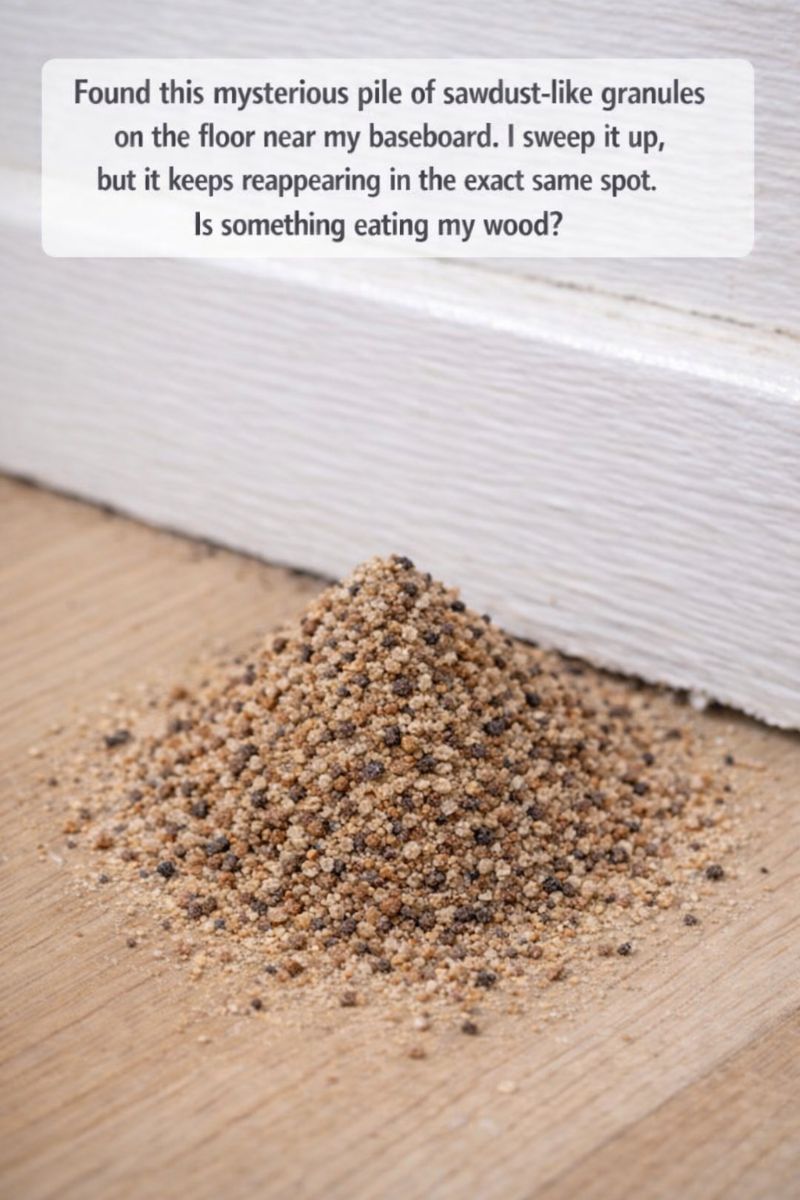
Discovering a mysterious pile of sawdust-like granules on your floor can be both puzzling and concerning. You may sweep it up, only for it to reappear in the same spot, leaving you wondering if something sinister is happening beneath your floors or behind your walls. This recurrent issue is more than just a nuisance; it could be an indication of a problem that requires immediate attention.
In this article, we delve into the possible reasons behind these persistent piles, focusing on whether they might be an indicator of a termite infestation or some other wood-destroying pest. By understanding the signs, you can take the necessary steps to protect your home from potential structural damage.
Advertisement
1. Why Sawdust-Like Piles Keep Appearing in the Same Spot
Piles of sawdust-like granules that consistently appear in the same location are often a sign of wood-destroying pests, particularly termites. Unlike ordinary sawdust produced by human activity, these piles are typically frass, or insect excrement. The presence of frass indicates that insects are actively consuming wood and expelling waste. This cyclical appearance happens because the pests continue their feeding and nesting activities, leading to fresh deposits.
These granules are often found near baseboards, windowsills, or other wooden structures, as these areas provide easy access for pests to tunnel into the wood. The granules are usually minute, measuring about 1 millimeter in size, and can accumulate rapidly depending on the extent of the infestation.
2. Termite Frass 101: What Drywood Termite Droppings Look Like
Termite frass, particularly from drywood termites, has a distinctive appearance that can help in identifying these pests. Unlike dampwood or subterranean termites, drywood termites live within the wood they consume and create frass as a byproduct. This frass is pushed out of their tunnels through small holes.

Leave a Comment