
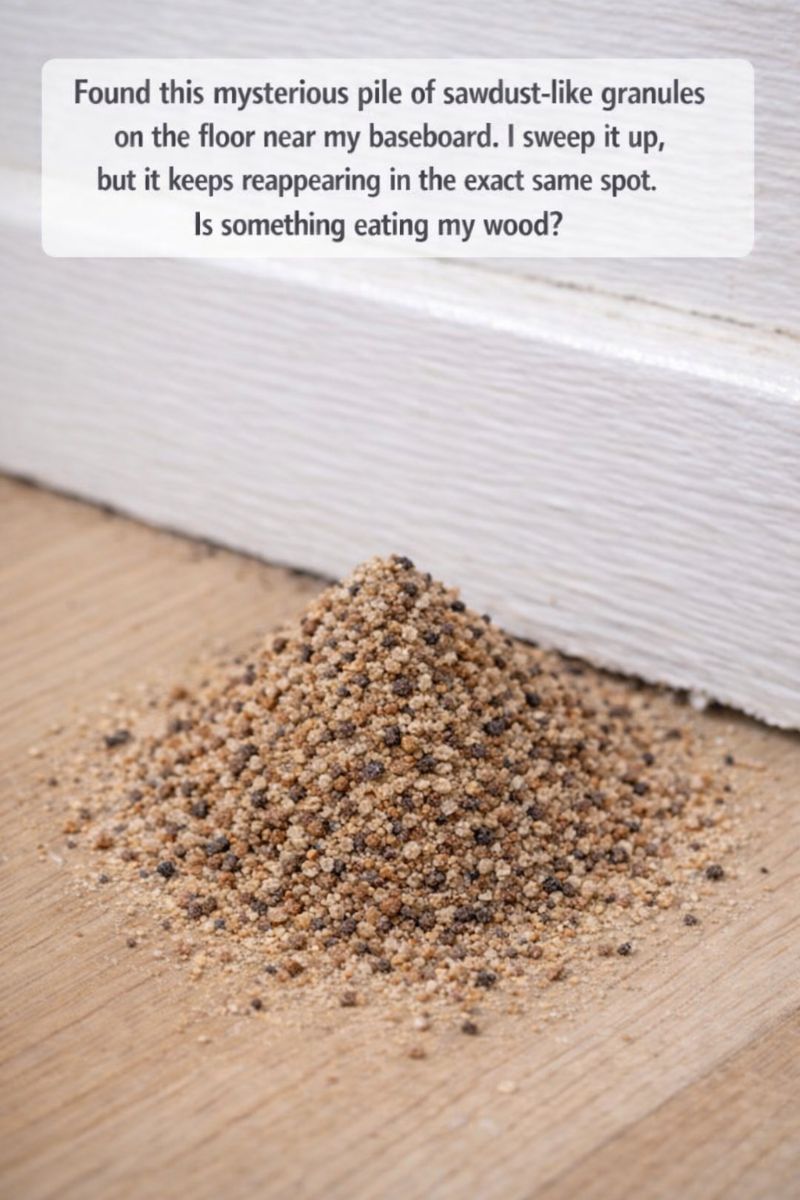
The droppings are typically pellet-shaped and can range in color from light tan to dark brown, depending on the type of wood being consumed. They are often found in small mounds and resemble grains of sand or sawdust, but with a more uniform size and shape.
3. How to Tell Termite Frass From Ordinary Sawdust or Dirt
Differentiating termite frass from ordinary sawdust or dirt involves close inspection. Termite frass is uniform in size, resembling tiny pellets. In contrast, sawdust from woodworking is irregular and flaky, while dirt is usually finer and lacks the pellet shape.
You can also perform a simple test by rubbing the substance between your fingers. Termite frass will feel coarse and granular, unlike the softer, more fibrous texture of sawdust. Additionally, frass will not dissolve in water, unlike dirt, which can muddy when wet.
4. Other Pests That Leave Granular Droppings Near Baseboards
While termites are a common culprit, other pests can also leave behind granular droppings. Carpenter ants, for example, excavate wood to build their nests and leave behind sawdust-like debris called ‘frass,’ which consists of wood shavings and insect parts.
Similarly, powderpost beetles produce fine, powdery frass as they bore through wood. Unlike termite frass, which is pellet-like, powderpost beetle frass is more akin to talcum powder. Identifying the exact pest responsible for the droppings can help in determining the appropriate treatment.
5. Hidden Entry Points: Kick-Out Holes and Tiny Cracks in Your Wood
Termites and other wood-boring insects often create small ‘kick-out’ holes in the wood to expel frass. These holes are typically less than 2 millimeters in diameter and can be found on exposed wood surfaces. Spotting these holes can be challenging, especially in hidden or less visible areas.
In addition to kick-out holes, tiny cracks or crevices in the wood can also serve as entry points for pests. Regularly inspecting wooden structures for such signs can help in early detection of infestations, allowing for timely intervention before significant damage occurs.
6. Simple At-Home Tests to Confirm Whether Termites Are the Culprit
To determine if termites are responsible for the frass, you can conduct a few simple tests at home. One method is the ‘tap test,’ where you gently tap on the wood surface near the suspected area. If the wood sounds hollow, it may indicate internal damage caused by termites.
Another approach is to place a piece of sticky tape over the frass pile overnight. If you find new frass on the tape the next morning, it suggests active pest activity. Additionally, inspecting for live termites or their wings near the area can be a direct indicator of their presence.
7. Where to Inspect First: Baseboards, Windowsills, Attics, and More
When inspecting for potential pest infestations, prioritize areas with visible frass, such as baseboards and windowsills. These locations often provide entry points for termites and other wood-boring insects.
Attics, crawl spaces, and basements are also critical areas to check, as they are typically dark and undisturbed, making them ideal nesting sites for pests. Look for any signs of frass, kick-out holes, or wood damage in these areas to assess the extent of the infestation.
8. When the Damage Is More Than Cosmetic: Structural Warning Signs
Beyond cosmetic damage, termites can compromise the structural integrity of a building. Key warning signs include sagging floors, buckling wood, and doors or windows that are difficult to open or close due to warped frames.
If you notice these signs, it’s crucial to engage a professional to conduct a thorough inspection and assess the severity of the damage. Structural issues caused by termites can lead to costly repairs if not addressed promptly.
9. DIY Stopgaps vs. Professional Treatment for Drywood Termites
For minor infestations, DIY solutions such as bait stations or chemical treatments may provide temporary relief. However, these methods often do not reach the entire colony and may only address the visible problem.
Professional pest control services offer more comprehensive solutions, including fumigation or heat treatments, to eradicate the infestation entirely. While these services may be more expensive, they ensure a more thorough approach to pest management, reducing the likelihood of recurrence.

Leave a Comment