
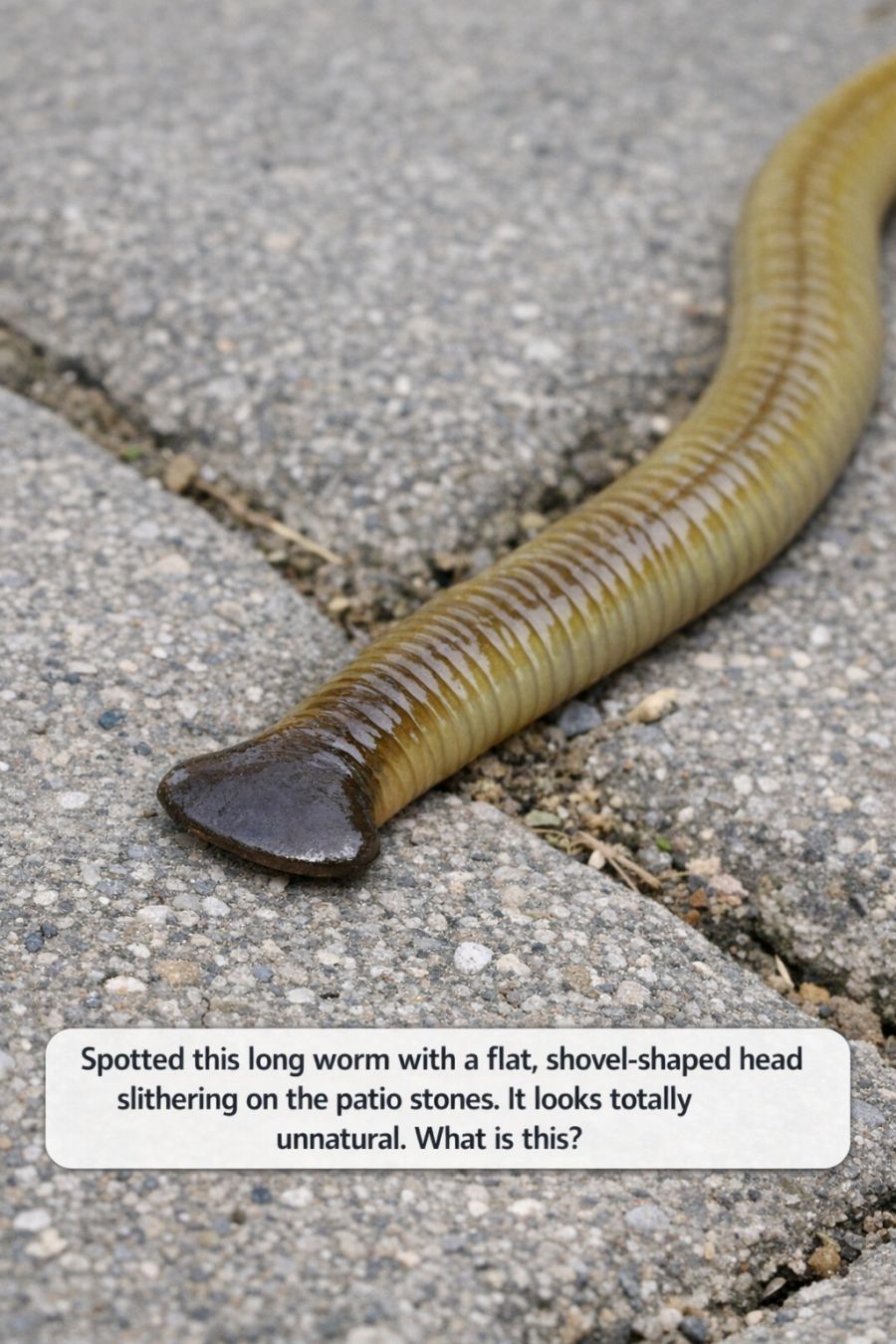
It’s not every day that you encounter a creature so strange it seems to have crawled out of a science fiction novel. Yet, for many homeowners, the sight of a long, flat worm with a distinctive shovel-shaped head slithering across the patio is becoming increasingly common. This peculiar creature, known as the hammerhead worm, is intriguing and alarming for its alien-like appearance and potential impact on local ecosystems.
Hammerhead worms are a type of terrestrial flatworm that have garnered attention due to their unusual appearance and predatory behavior. Originally native to Southeast Asia, these worms have made their way to various parts of the world, often hitching rides in the soil of imported plants. As their presence becomes more widespread, it’s important to understand what these creatures are, how to identify them, and what to do if you find one in your yard.
Advertisement
1. Meet the Hammerhead Worm: The Bizarre Creature on Your Patio
The hammerhead worm, or Bipalium, is a genus of predatory land flatworms known for their distinctive head shape, which resembles that of a hammerhead shark. These worms can grow quite long, often reaching lengths of 8 to 12 inches (20 to 30 centimeters), although some species can grow even longer. Their bodies are typically flattened and slimy, with a range of colors from brown to gray, often with darker stripes running down their length.
Unlike earthworms, which are beneficial to the garden ecosystem, hammerhead worms are carnivorous and primarily prey on other invertebrates, including earthworms. They are asexual and can reproduce by fragmentation, meaning a single worm can break apart and each segment can grow into a new worm. This makes them particularly adept at spreading and establishing themselves in new environments.
2. How to Identify a Hammerhead Worm at a Glance
Identifying a hammerhead worm is relatively straightforward due to its unique features. The most notable characteristic is its head, which is flattened and expanded into a spade or hammer-like shape, setting it apart from other worms. Their bodies are typically long and slender, with a distinctly flattened appearance.
Their coloration can also help with identification. Many hammerhead worms are brown or gray with darker longitudinal stripes. Some may have a more uniform color without stripes. They are often found in moist environments, such as gardens, under rocks, or on patios after a rain, as they thrive in damp conditions.

Leave a Comment