
The outer hull (a soft outer layer) is removed quickly to prevent staining.
The nuts are washed and dried.
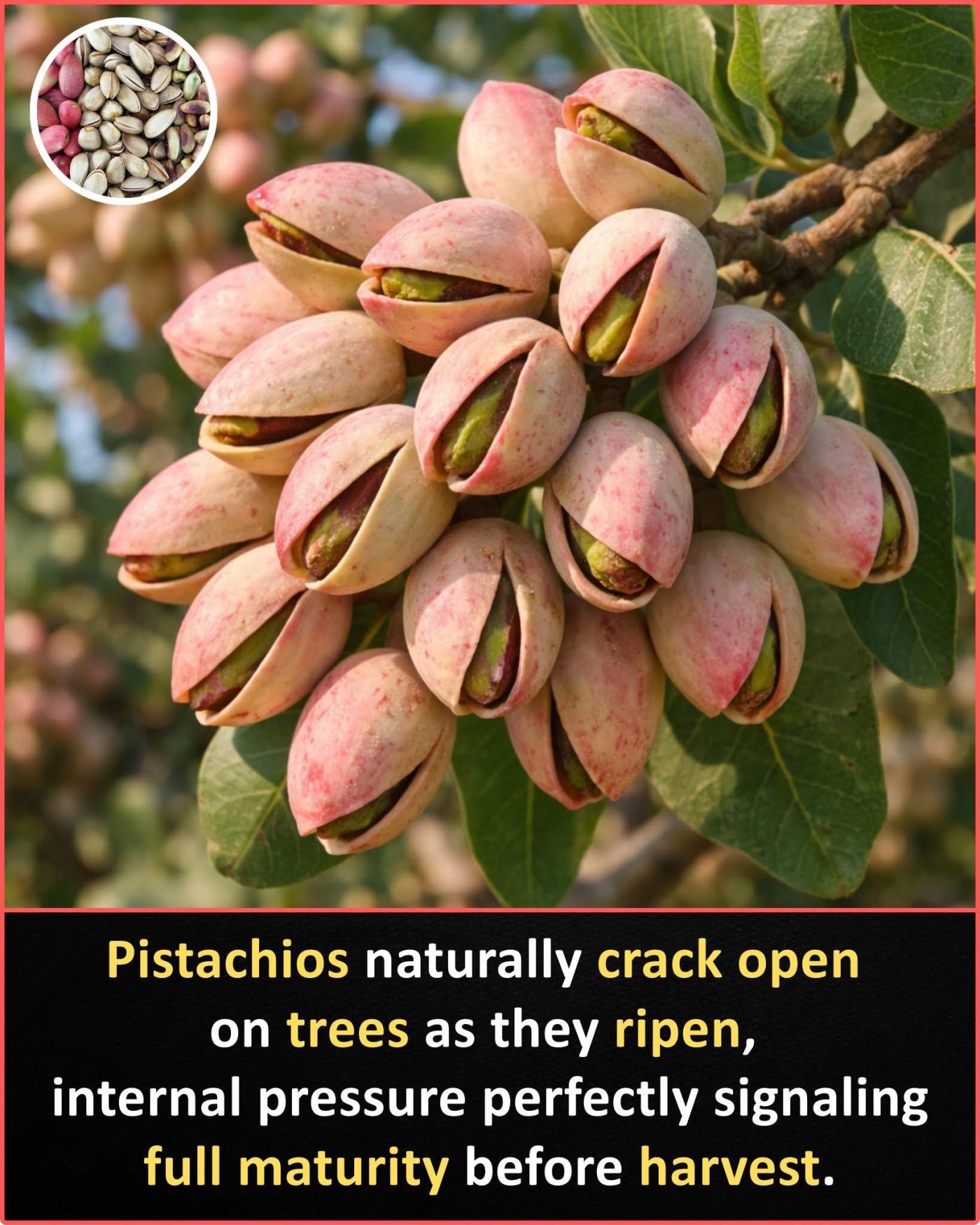
They are sorted by whether they opened naturally or remained closed.
Interestingly, unopened pistachios are often mechanically cracked later — but the naturally opened ones are considered premium.
🧪 What Makes the Green Color So Special?
The vibrant green color inside pistachios comes from chlorophyll. High-quality pistachios often have:
Bright green kernels
Slight purple tint from antioxidants
Rich, buttery flavor
That color is also a sign of proper growing conditions and healthy nutrient content.
❤️ Nutritional Benefits
Pistachios aren’t just tasty — they’re nutrient-dense:
High in plant protein
Rich in fiber
Loaded with healthy fats
Packed with antioxidants
Good source of vitamin B6 and potassium
Studies have shown they may support heart health, weight management, and blood sugar balance when eaten in moderation.
🌎 A Nut with a Long History
Pistachios are one of the oldest flowering nut trees. Archaeological evidence suggests humans have eaten them for over 9,000 years. They were even considered a royal snack in ancient Persia.
Today, they remain a global favorite — from simple roasted snacks to gourmet desserts and ice cream.
Final Thought
That satisfying little crack in a pistachio shell isn’t random. It’s nature’s way of saying:
“This nut is perfectly ripe.”
Next time you open a pistachio, remember — the tree already did most of the work for you. 🌰✨

Leave a Comment