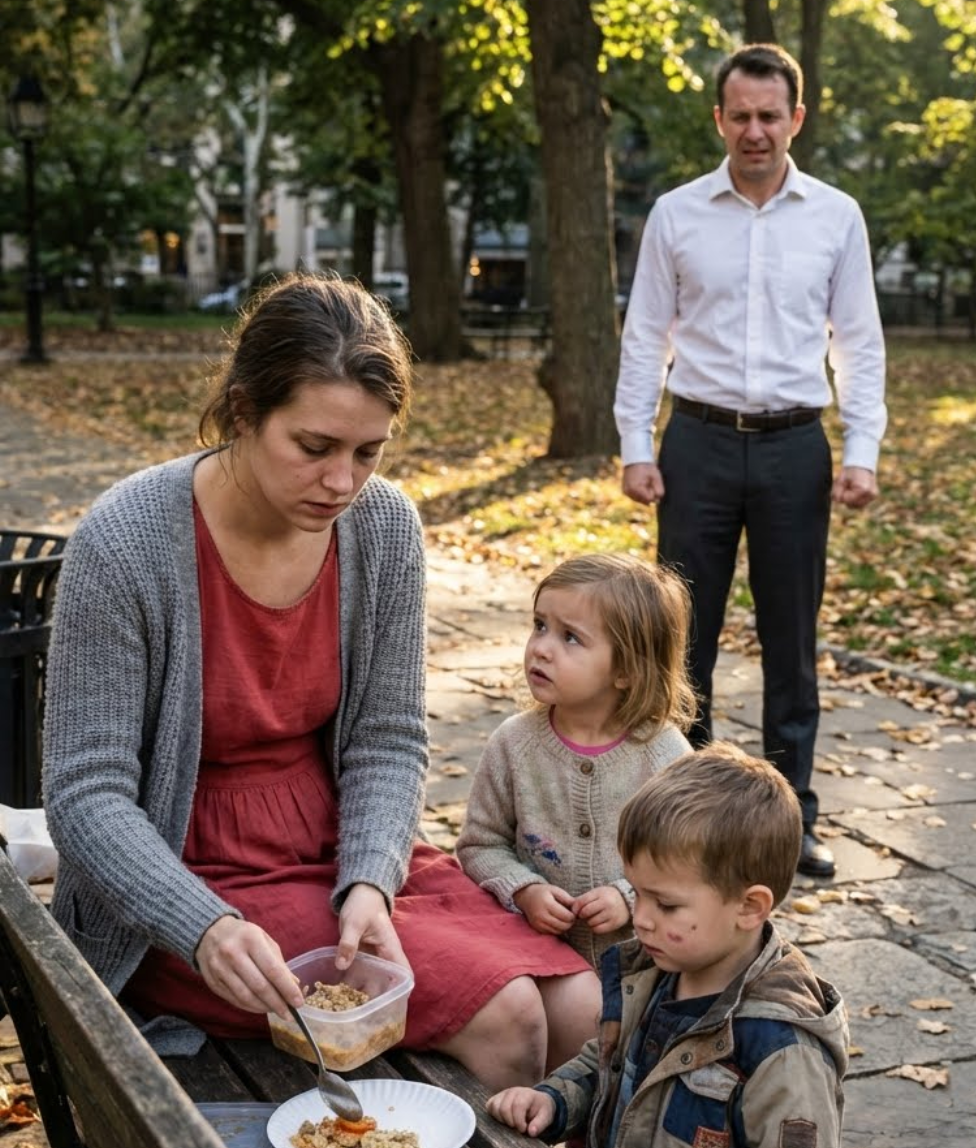

As soon as I can, I’ll leave.” Leonardo felt, for the first time since September, that he could breathe.
The house in Colinas del Valle seemed bigger than it was because it was filled with silence. But that changed the first night.
Karina came in with a plastic bag containing her few belongings, and Julián and Camila looked at the marble floors as if they were stepping into forbidden territory.
Leonardo showed them two bedrooms, a bathroom, a closet, and the children let out a laugh that seemed to have been bottled up for months.
At dinner, Leonardo made a simple pasta dish. He wasn’t a great cook; in fact, he burned the bread a little. But when Julián looked at his plate and said excitedly, “Look, little sister… there’s a plate of food for each of us,” Karina felt her heart break with gratitude.
Leonardo did too, though he swallowed it silently. It wasn’t expensive things that filled the house: it was the shared table, the clinking of silverware, the laughter of a little girl who was finding her strength again.
As the weeks passed, routine became a home.
Camila regained weight and color; she ran through the garden chasing butterflies. Julián returned to school with new notebooks, and for the first time, he spoke of the future without fear.
Karina, unable to remain idle, cleaned and cooked with a dedication that wasn’t servitude, but rather a regained dignity.
Leonardo would come home from work and feel something he hadn’t remembered: a longing to be home. One afternoon, he found her sewing in the living room, deep in thought, her needle moving back and forth as if it were also weaving hope.
It was a beautiful dress made from scraps. Karina confessed that she used to sew to sell at the flea market, but she didn’t have money for fabric, a decent place to work, or a display window to showcase her work.
Leonardo looked at the stitches and understood immediately: this wasn’t “a trade,” it was pure talent pushed into invisibility.
And the businessman who had previously only seen numbers saw, for the first time, an opportunity that didn’t seek profit, but justice.
He transformed an empty room into a workshop: shelves, white light, an industrial sewing machine, mannequins, fabrics organized by color. Karina cried when she opened the door, but they were no longer tears of defeat, but rather tears of something frightening because it is beautiful: possibility.
Over time, people from the fashion world arrived, invited by Leonardo.
They examined the dresses, touched the seams, studied the details, and the surprise was unanimous.
A boutique owner offered her a paid order, more than Karina had ever imagined. Suddenly, the woman who divided a plate into three unequal portions was receiving payment for her art that could support her children with dignity.
Leonardo, seeing her walk around the house with a less hunched back, understood that helping wasn’t just about “giving”: it was about opening doors that had always been closed to the same people.
And within this new life, something else grew, silent, shy, but inevitable. Glances that lingered an extra second. Hands that brushed against each other as they passed the plates. Late-night conversations in the kitchen while the children slept.
Karina blamed herself: “How can I feel this way about a man who saved us?” Leonardo held back for fear of seeming abusive, for fear of destroying the refuge he himself had offered.
But one night, with the echo of the clock on the wall and the smell of freshly brewed coffee, Leonardo decided that life was too fragile to remain silent.
“Karina… I’m in love with you,” he said, his voice bare. Karina remained motionless, and then confessed what she had kept hidden for weeks with shame and hope: “Me too.”
They held hands like someone grasping the edge of a new life. They kissed carefully, without haste, as if love were also a way of asking fate for permission.

Leave a Comment