
Cooking salmon is a delightful experience for many home chefs and seafood lovers. The rich flavor and tender texture of this fish make it a staple in many kitchens. However, a common occurrence that can be quite concerning is the appearance of a white substance oozing out of the salmon during cooking. This sight often leads to questions and concerns about the safety and quality of the fish.
For those who are unfamiliar, seeing this white substance can be alarming, leading to fears about worms or parasites being in their meal. Understanding what this white stuff is, why it appears, and how to deal with it is essential for anyone who cooks salmon regularly. In this article, we’ll delve into the nature of this phenomenon, how to distinguish it from potential issues, and tips to ensure your salmon remains a delicious and worry-free dish.
1. What Is That Weird White Stuff Oozing Out Of Cooked Salmon?
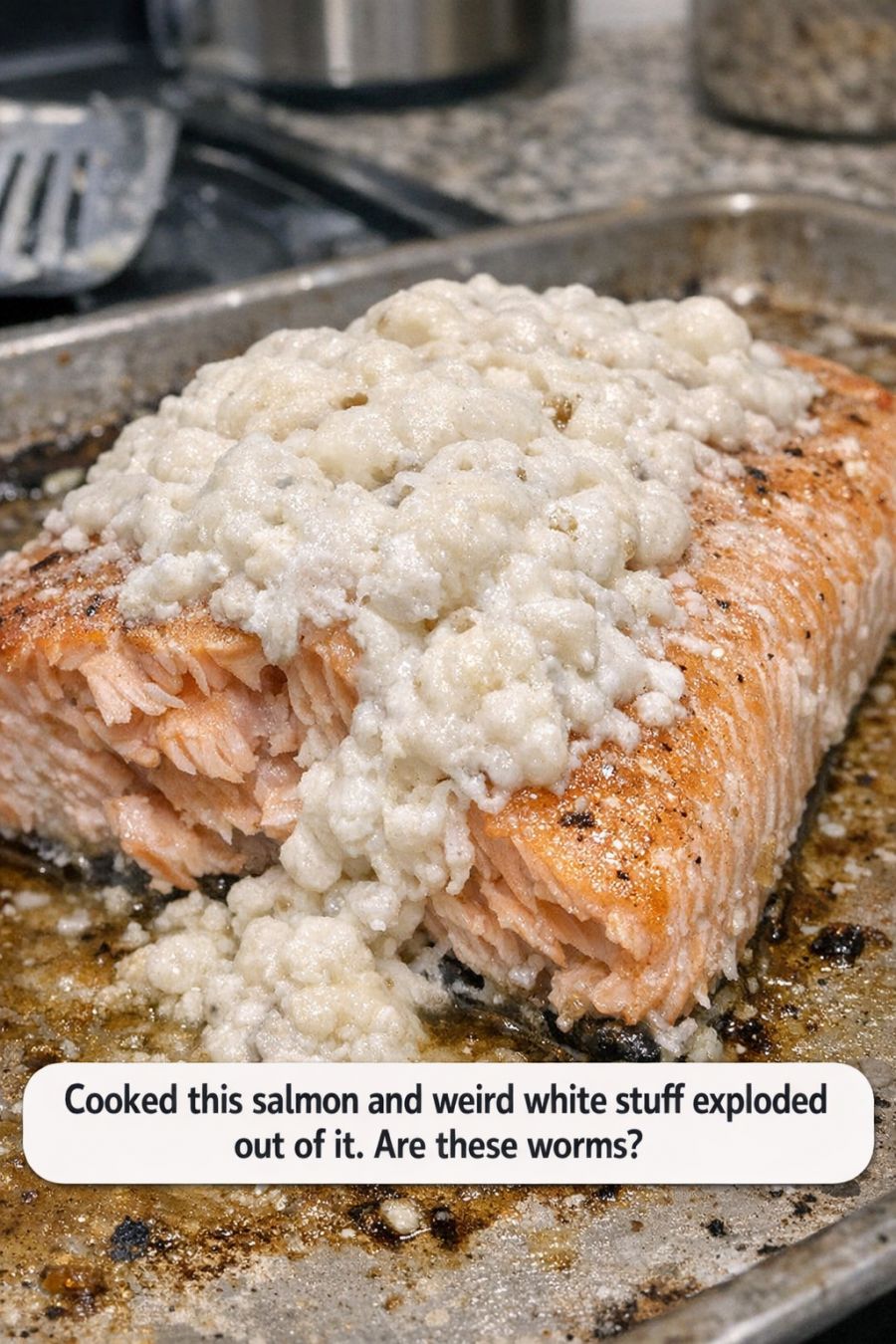
The white substance that often appears on cooked salmon is known as albumin. Albumin is a protein found in the muscle fibers of fish that coagulates and surfaces on the fish as it cooks. It is completely natural and occurs when the salmon is subjected to heat.
When salmon is heated, the muscle fibers contract, pushing the albumin to the surface. This process is more noticeable when salmon is cooked at a high temperature or for an extended period. While it may not be visually appealing, it is harmless and does not indicate a problem with the fish.
2. Albumin 101: The Totally Normal Protein Behind The White Gunk
Albumin is a water-soluble protein found in various animals, including humans. In salmon, it plays a crucial role in maintaining the fish’s muscle structure and moisture content. When the fish is raw, albumin is dispersed throughout the muscle fibers, but it becomes visible as a white film when denatured by heat.
Typically, the amount of albumin is quite small, but cooking methods involving higher temperatures can cause more albumin to seep out. This is why steaming or poaching salmon might result in less visible albumin compared to grilling or baking at high temperatures.
3. How To Tell Albumin From Actual Worms Or Parasites
Distinguishing albumin from worms or parasites is relatively straightforward. Albumin appears as a white, gelatinous substance on the surface of the cooked salmon, often forming a thin layer or small blobs. It is smooth and consistent in texture.
Worms or parasites, on the other hand, are usually more thread-like or segmented and may have a distinct shape or movement if they are still alive. If you ever encounter something that resembles a worm in your salmon, it is advisable to inspect it closely and consult a seafood expert if you’re unsure.

Leave a Comment