
Fermentation typically involves yeasts or bacteria that feed on sugars, producing carbon dioxide and alcohol. If a can is compromised, either through a faulty seal or damage, these microorganisms might find their way inside, leading to unwanted fermentation. It’s important to assess other factors, such as smell and appearance, to determine if fermentation is occurring.
3. Visual Clues: What Safe, Normal Bubbles Look Like
Safe, normal bubbles are usually small, clear, and dissipate quickly. They often appear immediately upon opening the can and are a result of the release of trapped gases. These bubbles should not be accompanied by any other visual changes to the liquid or tomatoes themselves.
If the liquid remains clear and the tomatoes appear intact and vibrant in color, it’s likely that the bubbles are harmless. This can be compared to the bubbles you might see when opening a carbonated beverage.
4. Red-Flag Bubbles: Foam, Froth, And Other Warning Signs
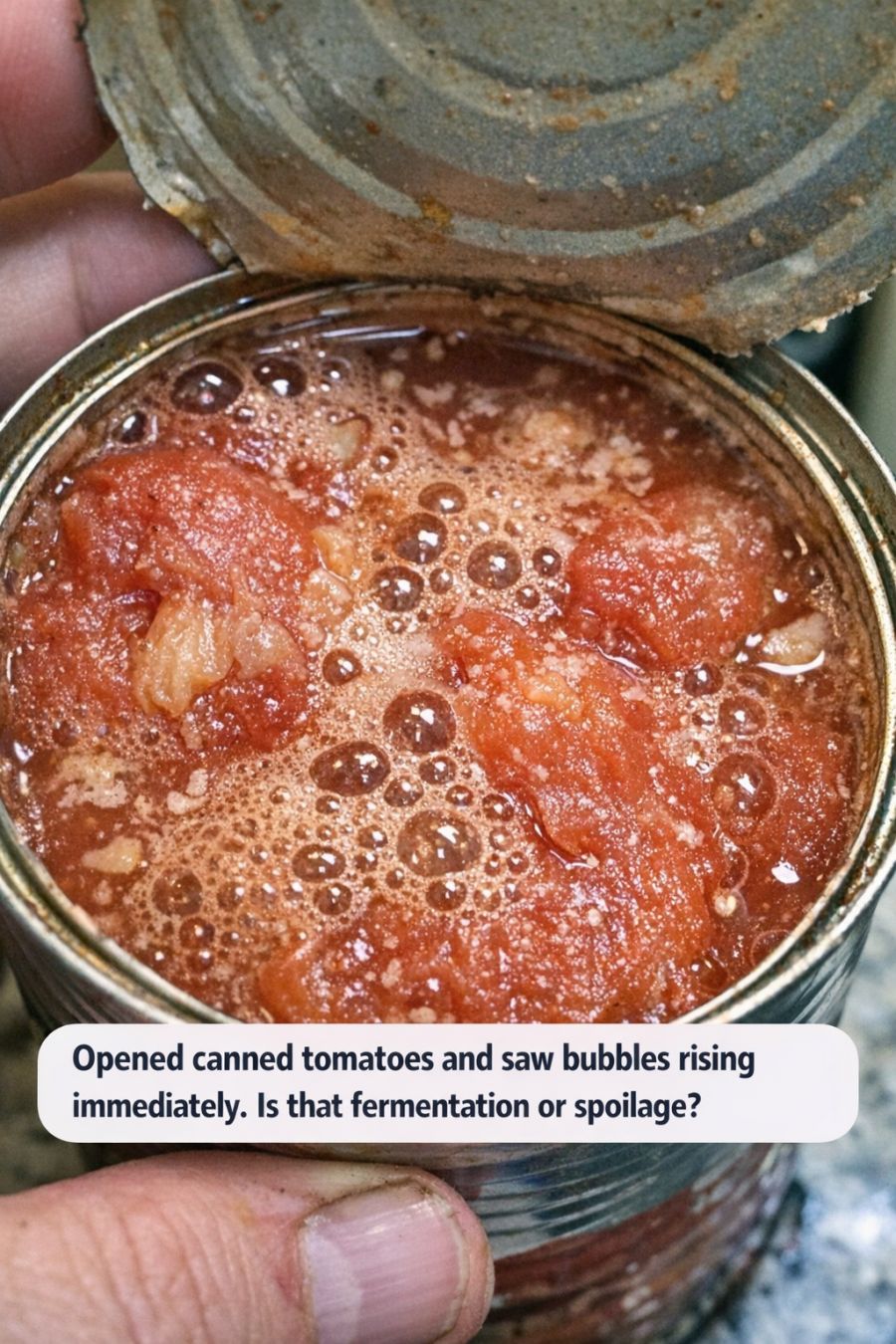
Bubbles that appear as foam or froth can be a red flag, indicating possible spoilage or fermentation. If the bubbles are persistent, forming a layer of foam on the surface, this could suggest microbial activity.
Fermentation-induced bubbles may also be accompanied by other signs of spoilage, such as discoloration of the tomatoes or liquid, a change in texture, or the presence of mold. If any of these signs are present, it’s best to err on the side of caution and discard the product.
5. The Smell Test: Sour, Yeasty, Or Off Odors Explained
The smell test is a reliable method to assess the safety of canned tomatoes. A fresh can of tomatoes should have a clean, slightly acidic tomato aroma. If you detect sour, yeasty, or otherwise off odors, this could indicate spoilage or fermentation.
Sour or pungent smells can be indicative of lactic acid bacteria activity, while a yeasty smell might suggest the presence of yeast fermentation. Both are signs that the product may not be safe to consume.
6. Texture And Color Changes That Point To Spoilage
Spoilage can also be detected through changes in texture and color. Tomatoes that appear mushy, slimy, or have an off-color could be spoiled. The liquid may appear cloudy or have an unusual hue.
These changes can be caused by enzymatic breakdown or microbial activity, both of which compromise the integrity of the tomatoes and render them unsafe for consumption.

Leave a Comment