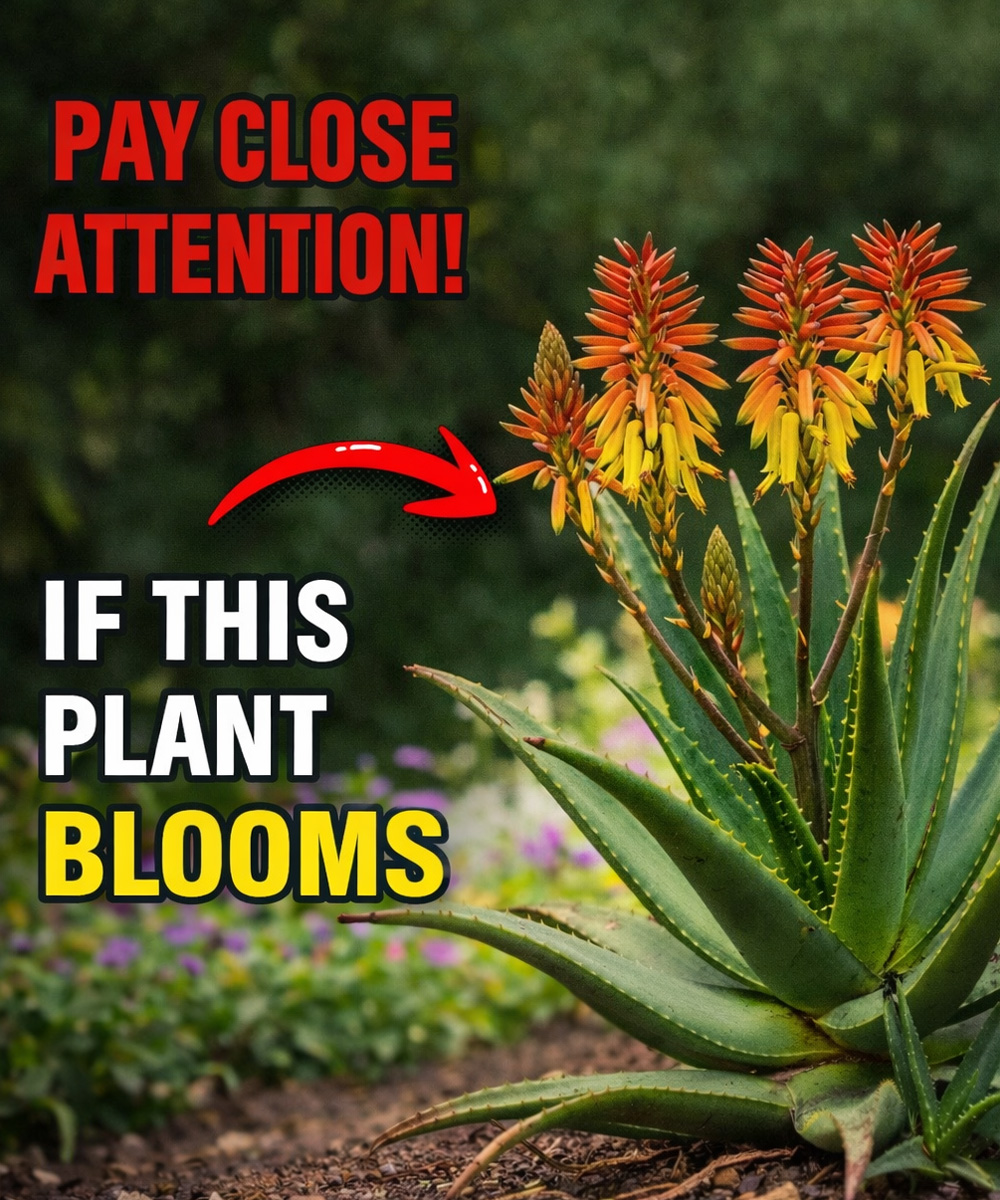

It needs at least 6 hours of direct sunlight per day. Place it near the sunniest window.
2. Water only when the soil is dry
Overwatering is the most common mistake. Aloe tolerates drought better than waterlogging.
3. Use a succulent potting mix
It should drain quickly. You can mix soil with coarse sand or perlite.
4. Allow for temperature changes
Slightly cooler nights help activate the natural flowering process.
5. Fertilize moderately
During spring and summer, you can use diluted succulent fertilizer once a month.
6. Be patient
Some plants take between 4 and 10 years to flower, and others may never flower indoors.
Tips and recommendations
Don’t repot the plant unnecessarily if it’s healthy; some root restriction can encourage flowering.
Avoid constantly moving it. Aloe thrives in stable conditions.
Clean the dust from the leaves so they absorb light better.
If it flowers, don’t cut the stem immediately; let it complete its natural cycle.
After flowering, continue with normal care; the plant won’t die from blooming.
The flowering of aloe vera is not a common event, but rather the result of maturity, favorable conditions, and a balanced environment. Beyond symbolic interpretations, seeing an aloe vera plant bloom is simply confirmation that the plant has received the proper care to thrive.

Leave a Comment