
Wear warm gloves outdoors
Wear rubber gloves for washing dishes or cleaning
This helps reduce direct exposure to cold, dry air and harsh water or cleaning products.
4. Use a Humidifier
Heated indoor air during winter becomes very dry. A humidifier added to your bedroom or other living spaces can help keep the air moist and prevent your skin from drying out as quickly.
5. Barrier Creams at Night
Before bed, apply a generous amount of a heavy cream or ointment to your hands and cover with cotton gloves so the product can absorb overnight.
This can help deeply nourish cracked skin.
Nutrition and Hydration
While skin care products help externally, what you eat and drink also matters:
Stay hydrated by drinking water regularly.
Eat foods rich in healthy fats (like nuts, seeds, and fish) which support skin health.
Foods with vitamins A, C, and E help skin repair and protect itself.
When to Be Cautious or Seek Medical Care Sooner
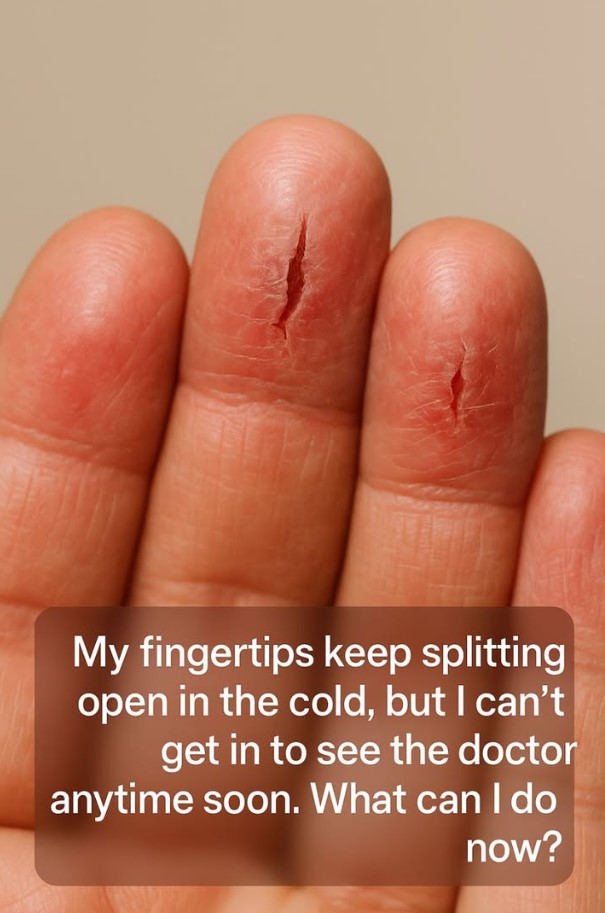
Splitting fingertips in cold weather and dryness is common, but certain signs mean you should seek medical evaluation earlier rather than later:
Seek care more urgently if you notice:
Deep cracks that bleed a lot
Signs of infection — increasing redness, warmth, pus, or a bad smell
Fever accompanied by painful skin cracks
Cracks that aren’t improving after consistent self-care for several days
These symptoms could mean your skin is more than just dry — there could be infection, dermatitis, eczema, or another skin condition that needs targeted treatment.
If you develop severe pain, spreading redness, or any signs of infection, it’s safer to contact a medical professional earlier.
What a Clinician Might Recommend When You Do Get Seen
When you eventually see a healthcare provider, they might recommend:
Prescription-strength moisturizers or ointments
Topical anti-inflammatory creams if eczema or dermatitis is suspected
Barrier repair treatments such as ceramide-rich formulas
Antibiotic ointment if there are signs of infection
Guidance on skin care tailored to your daily activities and environment
Getting a professional assessment helps target the right treatment for your specific situation.

Leave a Comment